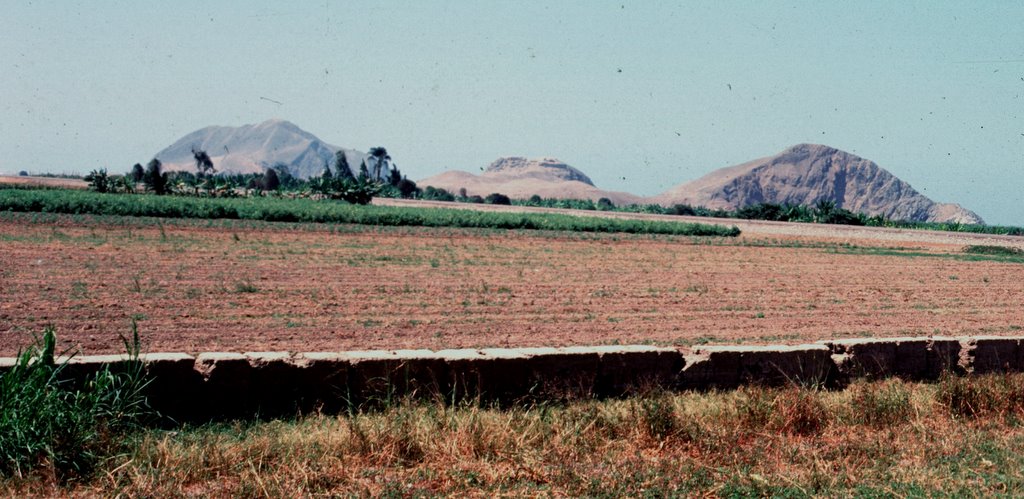
 View of El Salitre from inside the valley of Mala. To the right of the Cerro la Cruz and central rocky prominence where a building was erected Inca
El Salitre is an archaeological complex located between the south bank of the river mouth and beach Mala Totoritas. Includes a series of monumental buildings, which mostly must correspond to the Inca occupation of the valley, although there are some previous constructions made by local people, though rather primitive. You are at a significant place in the landscape of the mouth of the river, where you can view much of the lower valley of Mala and the Ocean. The builders of the main buildings (Incas) used the geographic area to locate its most important buildings. The Incas and elsewhere as Pachacamac o Cumbe in Chincha, used those points of reference in the landscape to buildings associated with deidales Inca local officials, in order to synthesize the beliefs of local people and assimilate them into their belief system official. As a record of that syncretism, which has survived to the present other forms of social expression, we found that at Cerro de la Cruz, where pre-Hispanic cemetery is a large, spontaneous ceremonies are still practiced, related to religious beliefs.
Archaeological Complex of El Salitre has 4 defined sections:
 1) Cemetery: Located on the slopes of Cerro La Cruz (see right). Currently, it is totally destroyed by successive raids over the years. You can tell at a glance that the graves were both individual and collective.
2) The Housing Sector. Located south-east of the cemetery. The buildings are of stone and mud and even it fails to distinguish plaster walls. There is no building up due to erosion caused by sea breezes (it is practically off the beach).
3) The Platform Pyramid, located east of Cemetery and accommodation sector NE Cemetery. It is the monumental sector of the site and was built by the accumulation of blocks comprising adobe walls (of typology Inca) and filled with mud. At the top is total wooden pitchforks recognize argue roofs of organic material.
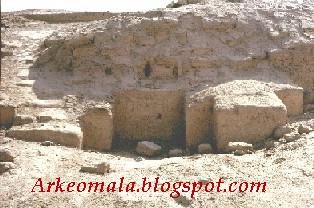
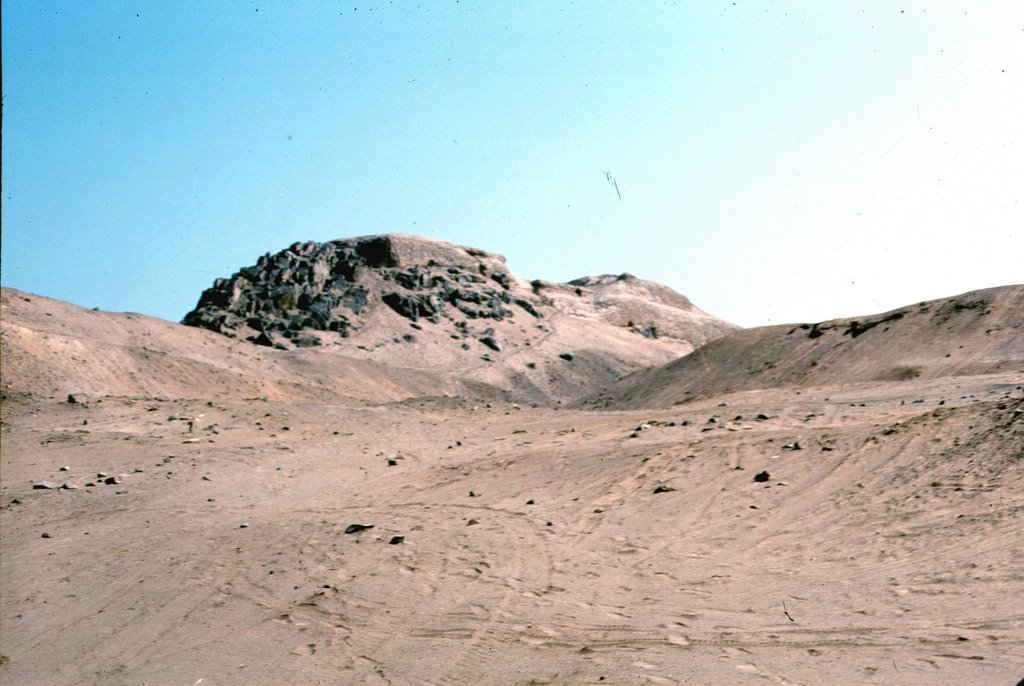 4) Inca unique building. Located on a rocky ridge south of the entire complex that overlooks the entire area of \u200b\u200bthe mouth of the valley and others. Se accede a este sector por unas escalinatas que aún se pueden apreciar en la zona, a pesar de su gran deterioro. El edificio está construido casi en su totalidad con adobes inca paralepípedos (hechos en molde) de regular tamaño. Lo más característico de este edificio es que en el área central donde existe un espacio abierto, dos fachadas a cada lado de esta "plaza" fueron decoradas con hornacinas trapezoidales con doble jamba (Ver vista de detalle abajo).
 Por referencias etnohistóricas y por su propia arquitectura se puede relacionar a este sitio con el denominado "hijo de Pachacamac" en Mala, y conocido como "SULCAVILCA" en dichos documentos del siglo XVI. Los "hijos" o "esposas" Pachacamac to which reference is made to the testimonies of the natives would collect myths that would reveal the factual ownership of some enclaves in the Andean area which were managed by the specialists of Pachacamac. For economic and political issues that can be interpreted as the operation of a discontinuous territory controlled by the group that the site of Pachacamac.


0 comments:
Post a Comment